
Blog
Quiet, dark bedrooms: how they are designed
Sleeping well depends on many things, but the bedroom controls two of them: how much noise gets in and how much light. Both are decided in the design, long before anyone buys curtains. Here is what is known and how we apply it in a home in Costa Rica.
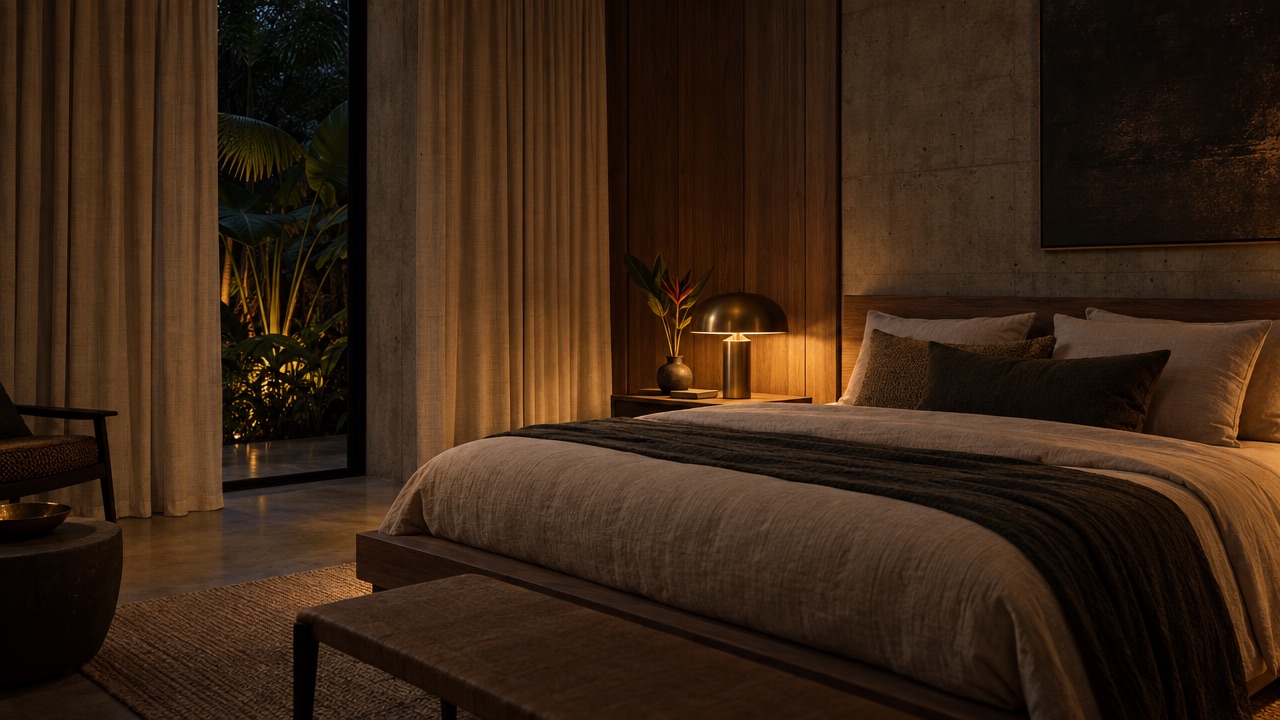
Noise: what is known
The reviews behind the World Health Organization guidelines find that nighttime traffic noise is associated with more awakenings and with more people reporting highly disturbed sleep. In the most recent update, for every 10 decibels more of outdoor nighttime noise, the odds of reporting highly noise-disturbed sleep more than doubled for road traffic. The quality of that evidence is moderate, and it rests on what people report about their sleep, not only on measurements.
A field study with 105 volunteers, which measured noise at the bedroom window, found that what happens at the start and end of the night matters most: more noise in the first hour meant sleep took longer to arrive, and more noise in the last hours lowered sleep efficiency by 2% to 3% per 10 decibels. It is a small study, but it matches what anyone notices: it is the car at 10 p.m. and the truck at 5 a.m. that bother.
Light: what is known
In an analysis of 116 young volunteers, ordinary room light (under 200 lux) in the hours before bed delayed the onset of melatonin, the hormone that signals night to the body, and shortened its duration by about 90 minutes. A review of more than 100 studies found that even very dim light (5 to 10 lux) during sleep, with the eyes closed, triggered a response in the body clock. A caution: many of those studies are small and done in the lab, and we do not know how much a person's rest changes at home. The reasonable reading is a trend that justifies careful design, not a promise.
How it translates into design
- Placement in the plan. The decision that pays off most, and costs nothing: put the bedroom on the side opposite the street, and use closets, bathrooms and storage as a buffer between the bedroom and the noise source.
- Distance and orientation. A bedroom that does not face the street, the carport or a neighbor's terrace receives less outside noise and light. We look at this in the study of the lot, before drawing. See what to check before buying a lot.
- Windows. In measurements in 102 Swiss homes, a closed window cut street noise by about 28 decibels, a tilted one by 16, and an open one by only 10. With closed windows, the difference depended on the frame material, the gaskets and the number of windows. A bedroom with fewer, well-sealed windows on the quiet side protects better.
- Glass. Double glazing helps, but not just any: a lab test found that when the air gap is under 30 mm, double glazing loses effectiveness against low-frequency engine noise. Laminated glass, two panes with a film between them, usually performs better than single glass of the same thickness. Ask the supplier for the technical data instead of relying on "double glazing" alone.
- Walls and ceilings. Mass stops noise. Block or concrete walls between bedrooms and living areas, and insulated ceilings, reduce noise between rooms and the sound of rain on the roof. Lightweight partitions let voices and the television through.
- Light on waking. A good bedroom is not a cave. A little morning daylight helps the body find its place in the day. That is why we like bedrooms facing east, or with a high window that lets in dawn light, which in Costa Rica arrives early, without facing the street.
- Darkness at bedtime. Thick curtains or blackout blinds, and no bright indicator lights. In the design, warm, dimmable fixtures and a switch beside the bed. For nighttime trips to the bathroom, a low amber light at floor level beats turning on the ceiling light.
The climate dilemma: ventilate or insulate
This is the most real tension in designing in Costa Rica. In a warm climate we like to ventilate, and an open window lets in a lot of noise. There are several ways out, chosen according to the lot:
- If the lot is quiet, cross ventilation with openings to the quiet side solves both.
- If there is street noise, ventilate toward a patio or inner garden and close the street side with walls and few windows.
- If closing up is needed, an air-conditioned, well-sealed bedroom can be the quietest option, at the cost of energy use.
- Windows with a ventilation chamber (plenum type) let air in, but their noise gain is modest: in a building measured next to a heavily trafficked road, they cut noise by 10 to 13 decibels.
There is no single answer. That is why we prefer to decide it with you in preliminary design, not at the end, when there is nowhere left to move the bedroom.
How we use it at the studio
For us the bedroom is part of the neuroarchitecture questions we ask from the start of the project: where does the noise come from, where does the morning sun come from, and what can be seen from the bed? You can read more in neuroarchitecture: what changes in a home, and see where this is decided in the phases of a project.
This guide is for general information. The studies cited are trends, not guarantees, and several are small. Persistent sleep problems deserve a consultation with a health professional, and design does not replace one.