
Blog
Neuroarchitecture: what changes in a home
Neuroarchitecture studies how spaces affect the brain, emotions and behavior. It is not a style or a magic formula. It is a way of asking questions while designing, backed by neuroscience and environmental psychology. This is how we use it in a home, a hotel or an office.
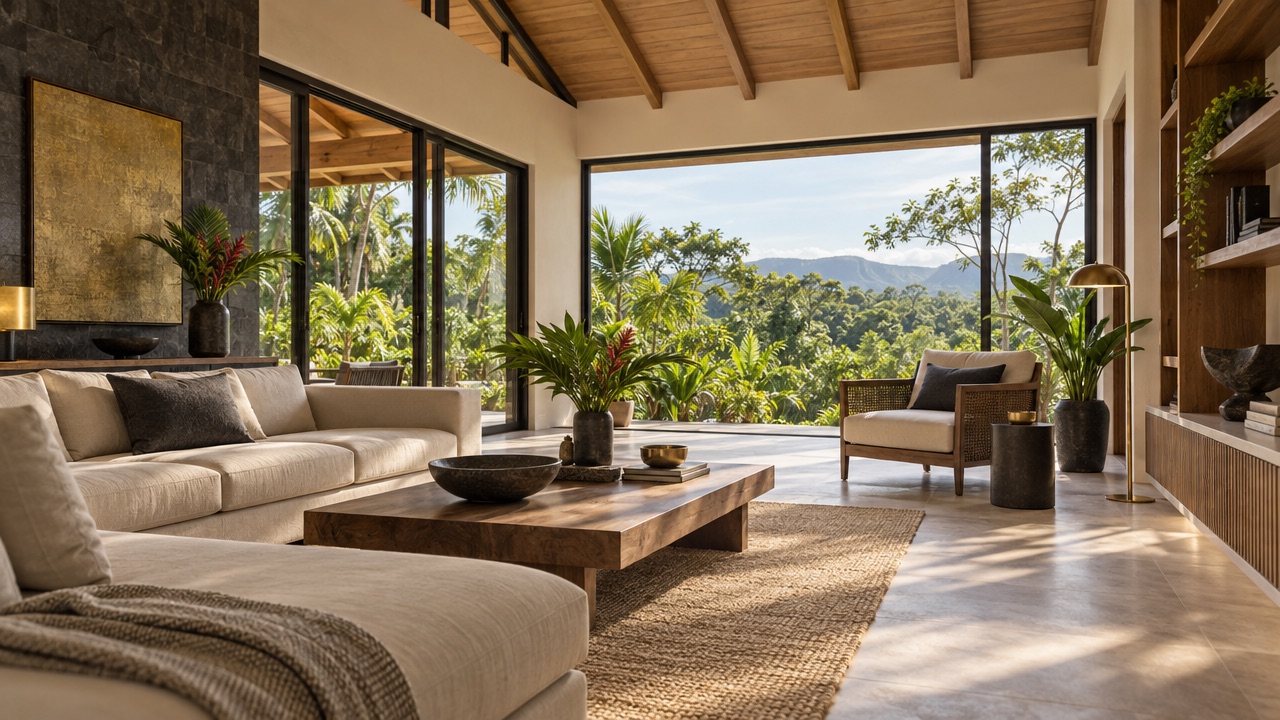
What it is, and what it is not
The field grew out of collaboration between architects and neuroscientists, and since 2003 it has had an international academy devoted to it (the Academy of Neuroscience for Architecture). It helps us understand why a space makes us feel calm, focused or uneasy, and to design with those responses in mind.
It is not a recipe. Many studies are small or were carried out in a lab, and no design can promise to cut your stress by a given percentage or make you sleep better. What it does is guide decisions that would otherwise be made out of habit.
What the research does support
- Natural light and the daily rhythm. Daylight regulates the body clock, and exposure to it is linked to sleep and mood. A house that lets light in at the right hours and controls it in the hot hours helps more than one that merely has large windows.
- Views of nature. A classic 1984 study (Roger Ulrich) found that hospital patients with a view of trees recovered from surgery faster than those who faced a wall. Since then, researchers have studied how seeing vegetation, water or sky helps lower tension. Recent reviews find that the effect is stronger with real nature than with images, and that in offices greenery, views and daylight weigh more than water features or natural materials.
- Height and proportion. Some studies suggest that high ceilings favor a sense of freedom and broad thinking, and low ceilings favor concentration and intimacy. That is why a living room and a study do not need the same height. Color matters too: a light ceiling is perceived as higher than a dark one.
- Noise. Constant noise, even when you get used to it, keeps the body on alert. Reviews for the World Health Organization link traffic noise to more awakenings and more interrupted sleep. A quiet bedroom and good acoustics in gathering areas are part of well-being, not a luxury.
- Clear circulation. Spaces where you understand where you are and where you are going cause less stress. In a hotel, this shows from the moment of arrival.
- Refuge and prospect. We feel comfortable in places where we can see without being seen: a sheltered corner that opens onto a wide view.
How it translates to a home in Costa Rica
- Afternoon sun. In climates like Guanacaste's, orientation and eaves decide whether a living room can be used at 3 p.m. or stays shut.
- Cross ventilation. Moving air without air conditioning is more pleasant, and also quieter.
- Transitions. Covered terraces and corridors between the house and the garden soften the passage between inside and outside, and lengthen the hours spent outdoors.
- Privacy gradient. From the most public (the entrance) to the most intimate (the bedrooms), each space gains in privacy. That keeps the house from feeling exposed.
- Bedrooms. Little light and little noise at bedtime, and good light on waking.
- Hotels and offices. The same principles, with more weight on circulation, acoustics and the light at each workstation or room.
How we use it at the studio
Luis Carlos Jiménez Facio, a partner at the studio and an interior architect, completed an 8-month specialization in neuroarchitecture (AENAD) in May 2026, and that training informs how we design our projects. We do not present it as a separate service. We use it as questions in the preliminary design phase, alongside the study of the lot: where does the sun come from, what is seen from each space, how do you live your day? The answers become design decisions. You can see where it fits in the phases of a project.
This guide is for general information. Research in neuroarchitecture keeps advancing, and its results are trends, not guarantees. It does not replace the advice of a health professional.