
Blog
Natural light at home: what works and what does not
Everyone wants a bright home, but light is not the same as big windows. In a climate like ours, a glass wall facing west can bring more heat and glare than well-being. Here is what is known about daylight in the home and how to design for having it at the right hours.
What research suggests
- More daylight at home, better body-clock alignment. In a crossover study with 20 residents, a week with windows that let in more daylight was associated with steadier melatonin, sleep onset 22 minutes earlier and more regular sleep. In the week with ordinary windows and blinds, melatonin was delayed 15 minutes and people reported less vitality and less positive mood. It is a small study, only two weeks per person, but it was done in real homes, not in a lab.
- What happens in daily life. In a study of 59 UK adults wearing a wrist light sensor, most received less daytime light and more nighttime light than recommended. More light before bed was associated with taking longer to fall asleep, and more light on waking with less morning sleepiness. Another study of 89 adults found that brighter days and more regular light patterns were associated with earlier sleep and more deep sleep early in the night. These are associations, not proof of cause and effect.
- Meeting the code minimum is not enough. A field study in north-facing homes found that even a daylight factor of 6.7%, well above the 2% minimum required in many codes, did not reliably deliver the morning light needed to set the body clock. Morning light matters most, and a room's average level does not guarantee it.
What not to promise
Natural light does not cure insomnia or depression, and no design can guarantee how much a person's rest will improve. What can be said is that, all else equal, a home that gets daylight at good hours and controls it during the hot hours supports routine better. And a home with lots of glass and little protection tends to produce the opposite: curtains closed all day and lights on.
How we design for it in Costa Rica
- Orientation. Morning light from the east is soft and arrives with little heat, ideal for kitchen, dining room and bedrooms. Afternoon sun from the west is the one that heats and dazzles: that is where to put services, closets, the garage or small, well-protected openings. It is decided when studying the lot.
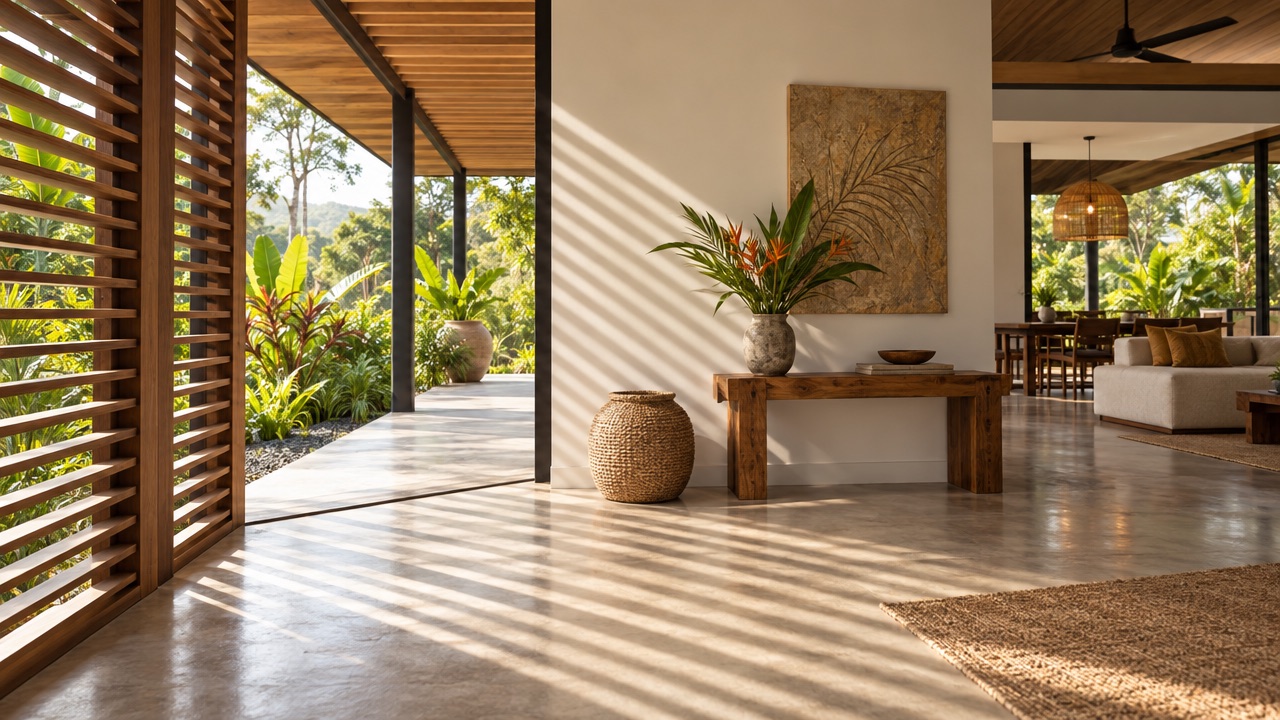
- Eaves and sun protection. A well-sized eave, pergolas, louvers or recessed openings let in sky light and stop direct sun. In a simulation study in a hot tropical climate, strategies combining shallow plans, external shading and well-placed openings cut the need for electric light without raising cooling use proportionally.
- Shallow plans. A house one or two rooms deep lets light and air reach every space. A deep, compact house ends up depending on light bulbs all day.
- Light from two sides. A space with windows on two walls, or with a high window, gets more even light with less contrast, and dazzles less than one with a single huge opening.
- High and bounced light. A high window, or an eave that reflects light onto the ceiling, lights deeper than a low window. Light colors on ceilings and walls help that light bounce.
- Glass and view. It is not about how much glass there is, but where it is. An opening onto the garden at eye level gives view and light. A glass wall facing west gives heat and forces the curtains closed.
- Adjustable light. A home that has daylight by day also has to be able to go dark at night. Blinds, curtains and warm, dimmable fixtures do the other half of the work. For bedrooms, see quiet, dark bedrooms.
How we use it at the studio
From the preliminary design phase we ask simple questions: when does the sun enter each space, what is seen from the window, when is shade needed? We answer them with the study of the lot and the way the people who will live in the house live. You can read more in neuroarchitecture: what changes in a home and see where this is decided in the phases of a project.
This guide is for general information. Most of the studies cited are small and show trends, not guarantees. It does not replace the advice of a health professional.